Streamline Your Outreach with E-mail Client App Landing Page Templates
Launching an e-mail client application requires more than just solid code; it demands a digital presence that communicates efficiency, security, and modernity at a glance. When you are competing in the crowded SaaS market, the first interaction a potential user has is usually your landing page. If that page looks disjointed or unprofessional, they will assume the software is the same. This is exactly why having a robust library of E-mail Client App Landing Page Templates is not just a luxury—it is a strategic necessity for developers and marketing teams. These templates provide the structural foundation needed to showcase your application’s features without getting bogged down in the weeds of web design from scratch.
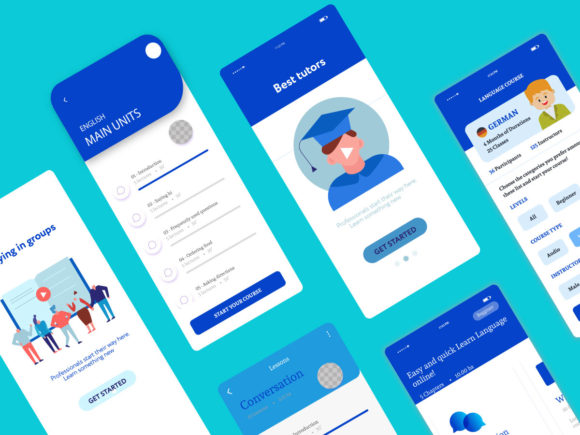
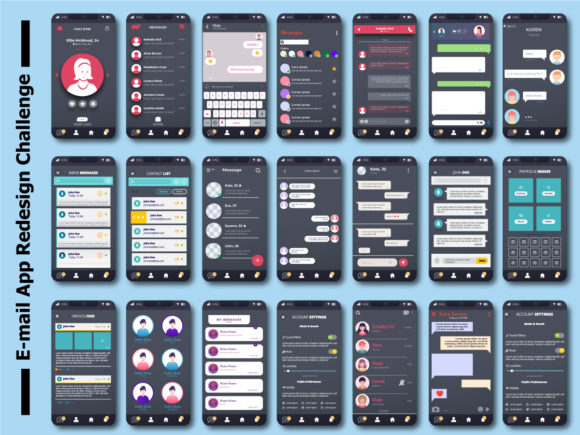
The visual personality of a high-quality landing page template for an e-mail app is distinct. It usually balances clean, whitespace-heavy layouts with sharp, high-contrast typography. You want a look that feels organized and clutter-free, mirroring the experience of a well-managed inbox. The style often leans towards a flat or semi-flat design aesthetic, utilizing crisp iconography to represent actions like "send," "archive," or "calendar sync." This minimalism is intentional; it reduces cognitive load for the visitor, allowing them to focus on the value proposition of your software rather than being distracted by overly decorative design elements.
The Power of Full Vector Assets and Logo Specification
One of the most critical, yet often overlooked, components of these design packages is the branding collateral, specifically the logo. When evaluating E-mail Client App Landing Page Templates, you must look for specific technical specifications that ensure longevity and scalability. The industry standard for serious design work is Full Vector assets. This means the graphics are mathematically calculated rather than pixel-based, allowing you to scale them from a tiny favicon to a massive billboard without losing a shred of clarity.
Specifically, you should look for packages that deliver SVG & EPS files. These formats are the workhorses of professional graphic design. An SVG (Scalable Vector Graphic) is perfect for web implementation because it loads quickly and scales perfectly on high-resolution retina screens. An EPS (Encapsulated PostScript) file is your master file for print media, ensuring your brand looks just as sharp on a business card as it does on a trade show banner. Additionally, a High Resolution output ensures that when you convert these vectors to raster images (like PNGs or JPGs), they remain crisp.
Another non-negotiable feature is the ability to Ready to Change Text. An e-mail client app is defined by its name and tagline. If you purchase a template or logo kit that requires complex layer manipulation just to swap out the company name, you are wasting valuable time. The best assets allow for instant text editing, enabling you to plug in your specific brand messaging immediately. This flexibility is vital for A/B testing different value propositions on your landing page.
Maximizing Your Design Assets
When you invest in a premium package, understanding exactly What You Get is essential for workflow efficiency. Typically, a comprehensive package will include a zip file containing various iterations of the design. You will often find a dedicated EPS folder. As mentioned, these files are Compatible with Adobe Illustrator, which is the gold standard for vector editing. Because the files are 100% Vector, you have total control over the color palette. If your brand identity uses a specific shade of electric blue for "call-to-action" buttons, you can easily resize and change colors of each and every shape as required.
This level of customization goes beyond simple color swaps. Because these are vectors, You could also combine different elements and create your own illustrations. For example, if the landing page template includes a set of generic "communication" icons, you can deconstruct a "chat bubble" and a "lock" icon to create a unique visual representing "secure messaging." This ability to remix assets ensures that your landing page doesn't look like a carbon copy of every other competitor using the same template. It allows you to build a unique visual language while starting from a professional baseline.
Strategic Implementation for Brand Identity
For entrepreneurs and small business owners, consistency is the bedrock of trust. When your E-mail Client App Landing Page Templates align perfectly with your in-app UI, your social media graphics, and your pitch decks, you signal reliability. This is where the concept of Modern Typography comes into play. A landing page template usually pairs a bold, attention-grabbing Display Font for headlines with a highly legible Sans Serif Font for body text. This combination ensures that your marketing copy is read easily, whether the visitor is on a desktop monitor or a mobile device.
However, typography is not just about legibility; it is about personality. If your e-mail client focuses on creative professionals, you might incorporate a subtle Script Font or Handwritten Font accent to add a human touch. If your target is corporate enterprise, sticking to a clean Serif Font can convey tradition and authority. The templates you choose should facilitate this flexibility. You should be able to test different Font Pairing options easily to see how they affect the visual hierarchy of your page.
Practical Workflow and Customization
The true value of these assets lies in the workflow. A package that is Easy to edit & customize saves hours of billable time. Imagine you are a marketer trying to launch a campaign by Friday. You don't have time to trace low-resolution logos or redraw icons. You need to open the file, change the text, adjust the primary color to match your brand hex codes, and export.
Furthermore, consider the versatility of the vector elements beyond the landing page. The icons and shapes included in these E-mail Client App Landing Page Templates can often be repurposed for other aspects of your Brand Identity. You might take a stylized envelope icon from the hero section of the landing page and use it as the watermark for your invoices, or adapt a background pattern for your email newsletter headers. This resourcefulness maximizes the return on your design investment.
Choosing the Right Template for Your Audience
When selecting your templates, consider the specific pain points of your users. Are they privacy-conscious? Look for templates that utilize "shield" imagery and darker, more serious color palettes. Are they creative freelancers? Look for layouts that are airy, colorful, and utilize Creative Font styles. The template is the stage, and your software is the performer; the stage must set the right mood.
Also, pay attention to the Commercial Font licensing included. If the template features a premium typeface, ensure the license covers your specific usage, whether it is for a single website or a multi-platform application. Respecting licensing protects your business legally and supports the type designers who create these tools.
Ultimately, the goal of using these templates is to bridge the gap between your technical product and your human audience. By leveraging high-quality, fully editable vector assets, you ensure that your landing page looks professional, loads fast, and communicates your value clearly. It allows you to focus on what matters most: building a great e-mail client and growing your user base.